
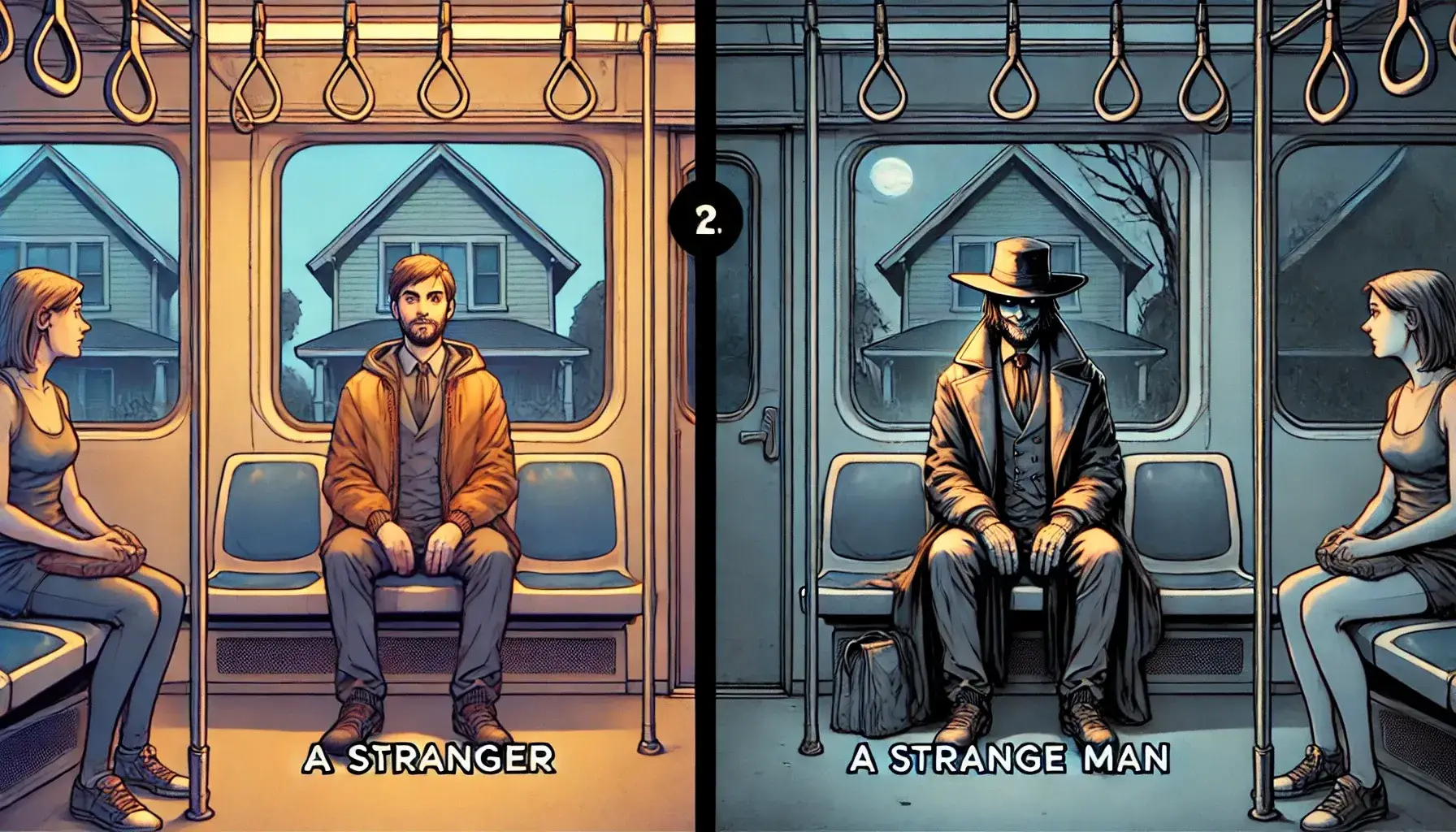
- Stranger(ストレンジャー) → *「知らない人」*を意味します。単に「面識がない人」というだけで、不審な意味は含まれません。
- 例: 「電車で知らない人の隣に座った。」(この場合、その人はただの他人という意味です。)
- Strange man/person(ストレンジマン/ストレンジパーソン) → *「変な人」や「奇妙な人」*という意味になります。見た目や行動が普通でない、不審な感じがする場合に使います。
- 例: 「変な男が家の前に立っていた。」(この場合、その男が怪しい、または異様な雰囲気を持っていることを示します。)
まとめ:
- A stranger(知らない人) = ただの他人
- A strange person(変な人) = 奇妙な行動や見た目をしている人
「A stranger is just a friend you haven’t met yet.」という言葉の意味
この名言は、「知らない人も、将来的に友達になれる可能性がある」という考えを表しています。新しい人々に対して心を開き、フレンドリーに接することを促す言葉です。
由来
このフレーズは、アイルランドの詩人ウィリアム・バトラー・イェイツの言葉だと言われることがありますが、彼が実際に言ったという確かな証拠はありません。20世紀のさまざまな演説や文章を通じて広まったと考えられています。また、歌や映画の中でも使われています。
There are no strangers here; Only friends you haven’t yet met. – William Butler Yeats
- Stranger → A stranger is simply someone you don’t know. It does not necessarily mean the person is unusual or suspicious—just unfamiliar.
- Example: “I sat next to a stranger on the train.” (This just means the person is unknown to you.)
- Strange man/person → This describes someone who seems unusual, odd, or suspicious in some way.
- Example: “A strange man was standing outside my house.” (This suggests the man was acting oddly or looked unusual.)
Summary:
- A stranger = an unknown person
- A strange person = a person who behaves or looks unusual
The quote “A stranger is just a friend you haven’t met yet.” means that any unknown person has the potential to become a friend. It encourages open-mindedness and friendliness towards new people.
Origin
This phrase is often credited to the Irish poet William Butler Yeats, but there is no strong evidence that he actually said it. Some believe it became popular through various speeches and writings in the 20th century. It has also been used in songs and movies.